Press Release - The consequences are dramatic
As of July 1st, the exemption from the CO₂ tax for fishing vessels in foreign trade has ceased. This means that it is no longer permissible to bunker tax-free in Norway for voyages to foreign ports. The Ministry of Finance implemented this legislative change at short notice, with the decision on June 23rd and effect already the following week.
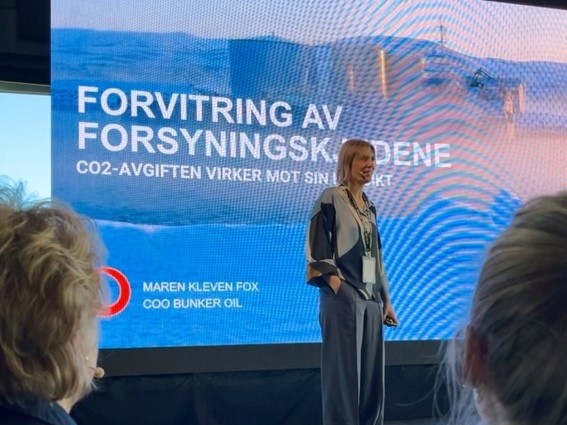
The consequences for bunkering facilities along the coast are already dramatic, and at Bunker Oil we have had cancellations of 1.5 million liters during the day of July 2nd. Good customers of many years come into the offices and thank us for the cooperation – they simply cannot afford to bunker in Norway anymore. This will be the nail in the coffin. If this does not turn around during the summer months, we will have to issue temporary layoff notices in August. This will put out the lights in many homes in the north.
We find it astonishing that the Ministry of Finance chooses to implement this change at short notice, while there is a majority in the Storting (Norwegian Parliament) to exempt the fishing fleet from the CO₂ tax. The consequences will be major for coastal communities and the industry along our coast, while this will also lead to negative climate consequences. The consultation responses to this legislative change were numerous and unequivocal regarding the consequences we have pointed out for a long time – namely that this will have a negative impact on the climate, our coastal communities, and our emergency preparedness.
The CO₂ tax was intended to be a climate measure to make consumers choose more climate-friendly alternatives. For the fishing fleet, and shipping in general, these alternatives are far into the future. The tax is a unilateral Norwegian measure and harms the competitiveness of Norwegian fisheries against foreign countries. Foreign fishers do not have this tax burden unless they bunker in Norway. They have left Norwegian ports due to the taxes.
The climate organization Zero points out in its consultation input:
«This weakens the credibility of Norwegian climate policy and at the same time creates a competitive disadvantage for actors bunkering in Norway. Targeted measures must therefore be introduced that reduce the risk of carbon leakage and ensure that the incentives actually lead to real emission cuts.»
Furthermore, LO (The Norwegian Confederation of Trade Unions) writes:
«It is highly probable that such an exemption will lead to vessels going to foreign ports and bunkering there, or that bunkering ships outside the territorial limit will be used. This would be highly unfortunate and could lead to the closure of bunkering stations along the Norwegian coast, thereby weakening Norwegian emergency preparedness. There is reason to warn against incentives that increase the use of bunkering vessels – not least for reasons of environment, preparedness, and safety of operation, stability, and crew. Such a change could thus lead to the loss of Norwegian jobs and negatively affect preparedness and security of supply, especially in light of today's geopolitical situation.»
See further details in the consultation responses here:
Høring – avgiftsfritak CO₂-avgift for utenriks sjøfart – avgrensing mot fiske- og fangstfartøy (Skatteetaten)
The phones have not stood still at Bunker Oil in recent days. Customers are warning of changes in bunkering patterns to foreign ports. In Troms and Finnmark, the ocean-going fishing fleet constitutes the bulk of the volume, and the loss of this will threaten the operational basis for all our facilities in Troms and Finnmark, with the exception of Tromsø. The figures speak for themselves, with today's cancellations of 1.5 million liters where the vessels travel to Shetland and the Faroe Islands and bunker from tankers at sea.
We are now looking at a possible scenario where we manage to remain with one facility in Tromsø and one in Ålesund. We cannot sustain Finnmark without the ocean-going fishing fleet. Our tank facilities also deliver fuel to the Armed Forces and operate as main hubs for the supply of fuel to smaller coastal communities – coastal vessels and the coastal fleet – as well as stations for fuel to industry, contractors, and others who need fuel in their work. In the north, there are vast distances and a vulnerable distribution network. The closure of our facilities will have major ripple effects in the north. We are concerned for local communities and fuel emergency preparedness in Finnmark first and foremost – both for the Armed Forces, the fleet, and the food supply.
While Norwegian authorities are tightening regulations, the Danes have gone the opposite way. There, Danish and foreign (including Norwegian) fishers are compensated with 100% of the CO₂ tax – because Danish politicians have understood what Norwegian politicians have not: namely, that every fish should be landed in Denmark.
Since fisheries are the backbone of much of the value creation along the coast, other businesses will also be affected by the lack of assignments for the ocean-going fishing fleet. A trawler in Norwegian ports contributes to value creation through the delivery of catches to fish processing plants, repairs (shipyards, electricians, etc.), provisions and more. When vessels now seek foreign ports for bunkering, it is likely that other deliveries to the vessels will also be carried out abroad.
We hope that the authorities see the consequence of this decision and reverse this regulatory change as soon as possible before irreparable damage occurs.
Bunker Oil AS
Maren Kleven Fox
COO